|
Sandstone
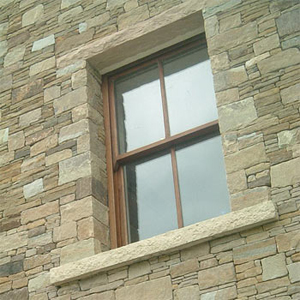 Sandstone is a sedimentary rock composed mainly of sand-size mineral or rock grains. Most sandstone is composed of quartz and/or feldspar because these are the most common minerals in the Earth's crust. Like sand, sandstone may be any color, but the most common colors are tan, brown, yellow, red, gray and white. Since sandstone beds often form highly visible cliffs and other topographic features, certain colors of sandstone have been strongly identified with certain regions. Sandstone is a sedimentary rock composed mainly of sand-size mineral or rock grains. Most sandstone is composed of quartz and/or feldspar because these are the most common minerals in the Earth's crust. Like sand, sandstone may be any color, but the most common colors are tan, brown, yellow, red, gray and white. Since sandstone beds often form highly visible cliffs and other topographic features, certain colors of sandstone have been strongly identified with certain regions.
Some sandstones are resistant to weathering, yet are easy to work. This makes sandstone a common building and paving material. Because of the hardness of the individual grains, uniformity of grain size and friability of its structure, sandstone is an excellent material from which to make grindstones, for sharpening blades and other implements. Non-friable sandstone can be used to make grindstones for grinding grain, e.g., gritstone.
Rock formations that are primarily sandstone usually allow percolation of water and are porous enough to store large quantities, making them valuable aquifers. Fine-grained aquifers, such as sandstones, are more apt to filter out pollutants from the surface than are rocks with cracks and crevices, such as limestones or other rocks fractured by seismic activity.
Physical & Chemical Properties
The durability and strength of these rocks depend on the cementing material. The best quality sandstone, for building purpose, should be of fine grain and uniform texture. The colour of the sandstone may be either white, grey, yellow, buff, brown or red.
| Sandstone Physical Properties |
| Color: |
Minor color tonal variations exist but within the tolerance limit. |
| Hardness: |
6 to 7 on Moh's Scale Density 2.32 to 2.42 Kg/m3 |
| Compressive Strength: |
365 to 460 Kg/m2 |
| Water Absorption: |
Not more than 1.0 % |
| Modulus of Rupture: |
197-200 Kg/cm2 |
| Porosity: |
Low to very low. |
| Weather Impact: |
Resistant |
| Sandstone Chemical Properties |
| SiO2: |
93-94% |
| Iron (Fe2O3): |
1.5%-1.6% |
| Alumina (Al2O3): |
1.4 to 1.5% |
| Soda (Na2O) & Potash (Kro): |
1.0% to 1.2% |
| Lime (CaO): |
0.8% to 0.9% |
| Magnesia (MgO): |
0.2 to 0.25% |
| Loss On Ignition (LOI): |
1.0% to 1.2%. |
| They are highly resistant to avoids, alkalis and thermal impact. Insolubility in acids and alkalis is about 97%. |
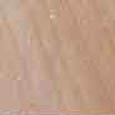
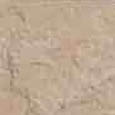
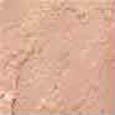
Colors Available
 |
 |
 |
 |
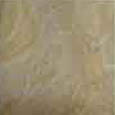
| Color 1 |
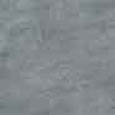
Color 2 |
Color 3 |
Color 4 |
 |
 |
 |
 |
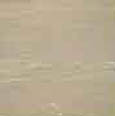
| Color 5 |
Color 6 |
Color 7 |
Color 8 |
 |
 |
|
|
| Color 9 |
Color 10 |
|
|
| The above colors may have tonal variation between lot to lot |
Regular Sizes
All tile sizes are in cms (Cut to size)
Under
28 x 28
28 x 56
56 x 42
56 x 56
56 x 70
56 x 84
56 x 114
|
Over
30 x 30
30 x 60
45 x 45
60 x 45
60 x 60
60 x 75
60 x 90
60 x 120
|
Other
20 x 20
20 x 40
30 x 90
40 x 40
60 x 40
|
Big slabs are also made available as per requirement
Thickness (Tiles & Slabs)
Natural: 20mm onwards
Calibrated: 12mm to 15cm
Carved Products
Fire Places
Mentels
Balustrades
Statues
Fountains
Balls
Pots
Vasses
Bird Baths
Table Tops
Dombs
Garden Benches
Wall Mounted Fountains
Chairs
Sofas Etc
Any figure can Be made, If it is required.
Finishes
Hand cut edges
Machine cut
Polished
Calibrated
Honned
Sawn
Tumbled
Brushed
Sandblasted
Flammed
Bull nosed
Fine hand work etc
Edges
Both hand chiseled and machine cut (sawn)
Please visit the edges section for more details
|
Next Step
|